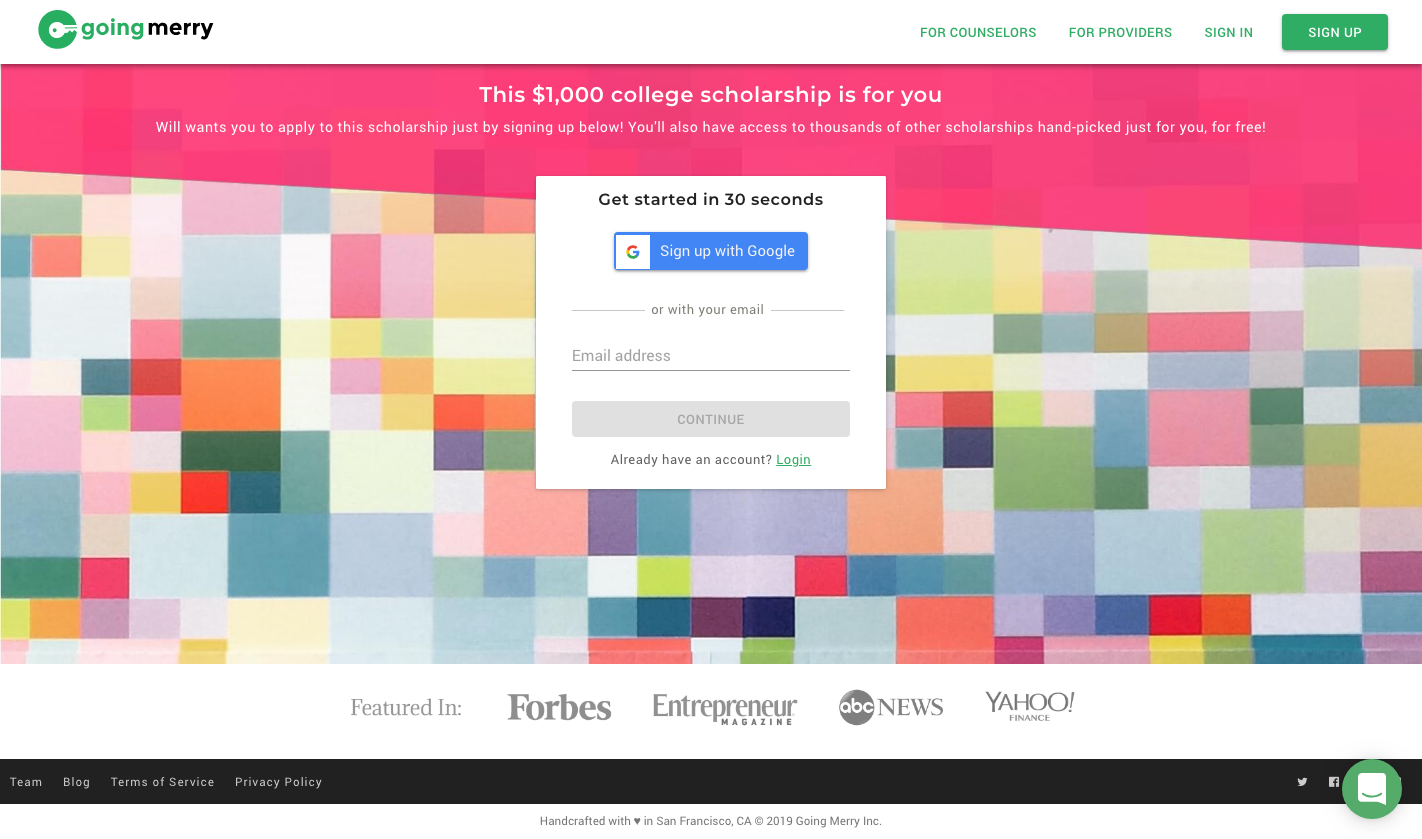
A brilliant idea with less than a year to prove it.
Millions of scholarship dollars go unclaimed every year. Not because students don't need them. Because students don't know about them, and the process of finding and applying is genuinely exhausting. Going Merry was built to fix that.
The product existed. A manually assembled scholarship database, transcribed from PDFs and documents, presented through a basic web app. Useful in concept, but rough at the edges. No personalization, no growth hooks, no real reason to come back after your first visit. Seed funding was running out. The runway was under ten months. The company needed active, engaged users fast enough to show investors the idea was real.
I joined as the only member of the team with a public school education and direct ties to the communities Going Merry was trying to reach. That context mattered more than any framework.
Talking to the students nobody else was talking to.
Before touching the product, we ran focus groups at inner-city Philadelphia public high schools. With students. With counselors. With the people this thing was actually for.
We wanted to know what they understood about scholarships, what they planned to do for college, what they might consider if they thought they could actually afford it. The conversations were genuinely affecting. Students who had written off college would shift when they understood that money they didn't know existed could change the math entirely.
A few things became clear quickly. Students didn't apply because the process felt impossibly hard. They didn't share scholarships because it felt competitive. And most had no idea that scholarships existed for things as specific as their neighborhood, their sport, or their hair color. That specificity became the product strategy.
Activation, goal completion, then referral.
The growth strategy was built in three stages, each feeding the next. Getting students in the door was only valuable if they actually did something. And getting them to do something was only sustainable if it brought more students in.
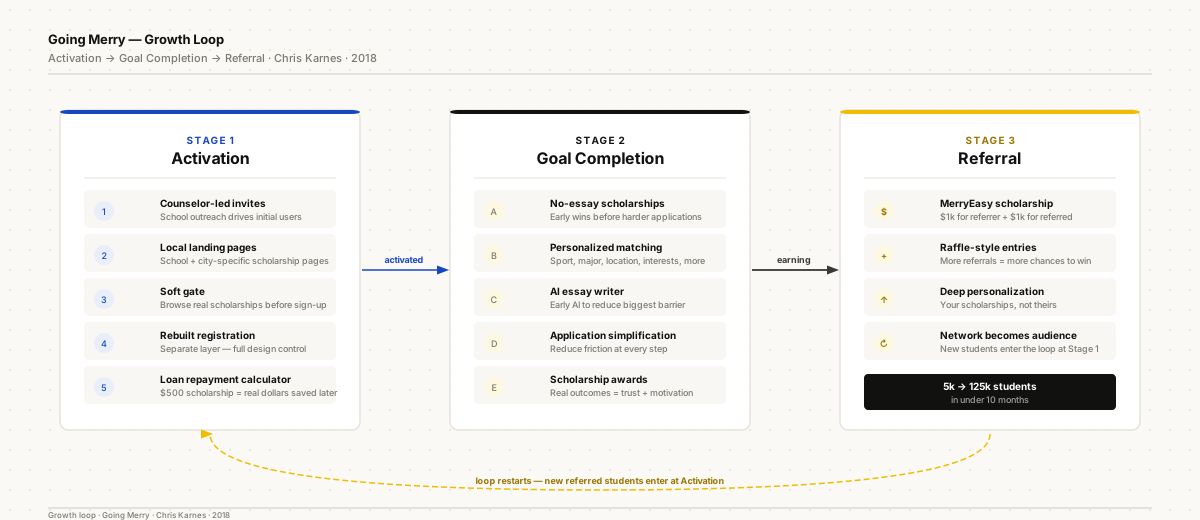
The growth loop: Activation to goal completion to referral, and back to the start
The two calls that shaped everything.
What we built.
Everything shipped inside a ten-month window with a team of five. The output was more than screens — each piece fed into the growth loop.
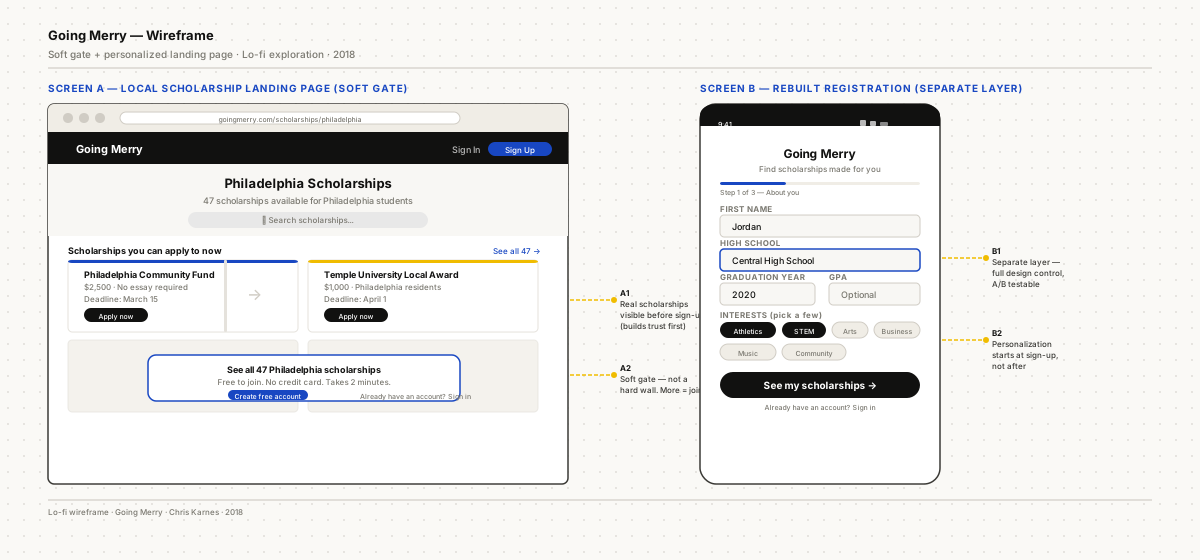
Lo-fi wireframes: the soft gate landing page and rebuilt registration flow
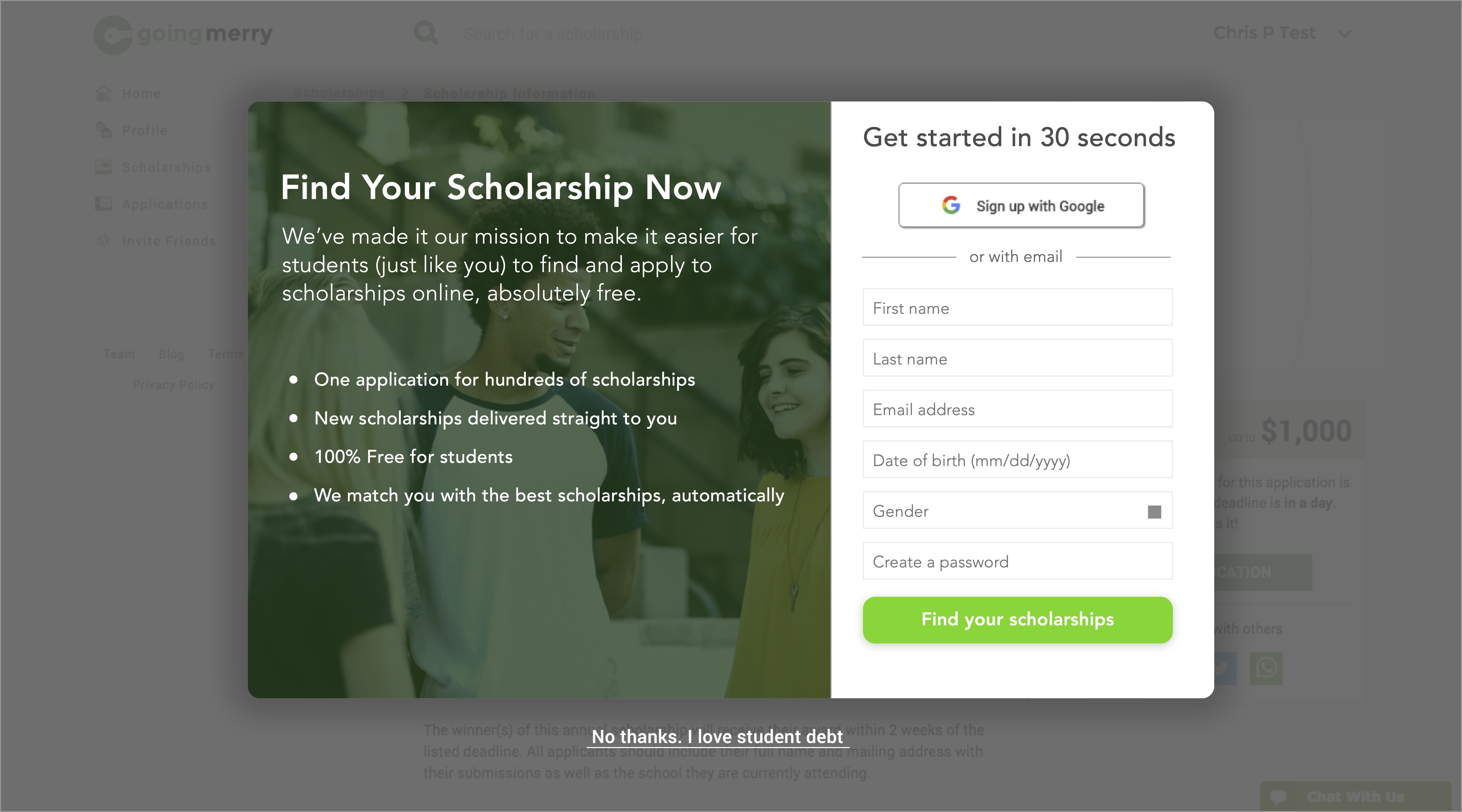
Soft gate in production — real scholarships visible before sign-up
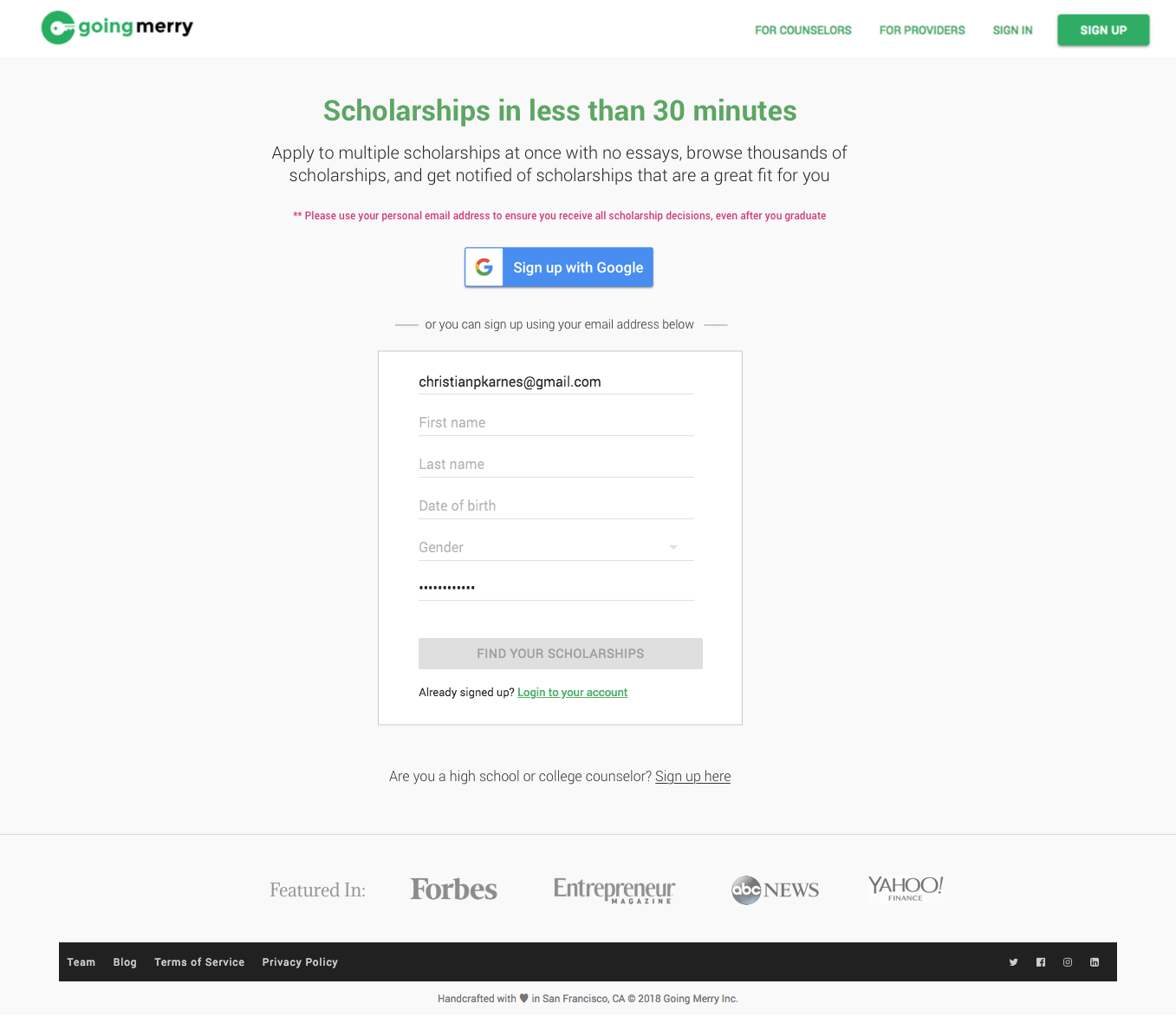
General landing page — built to show value before sign-up
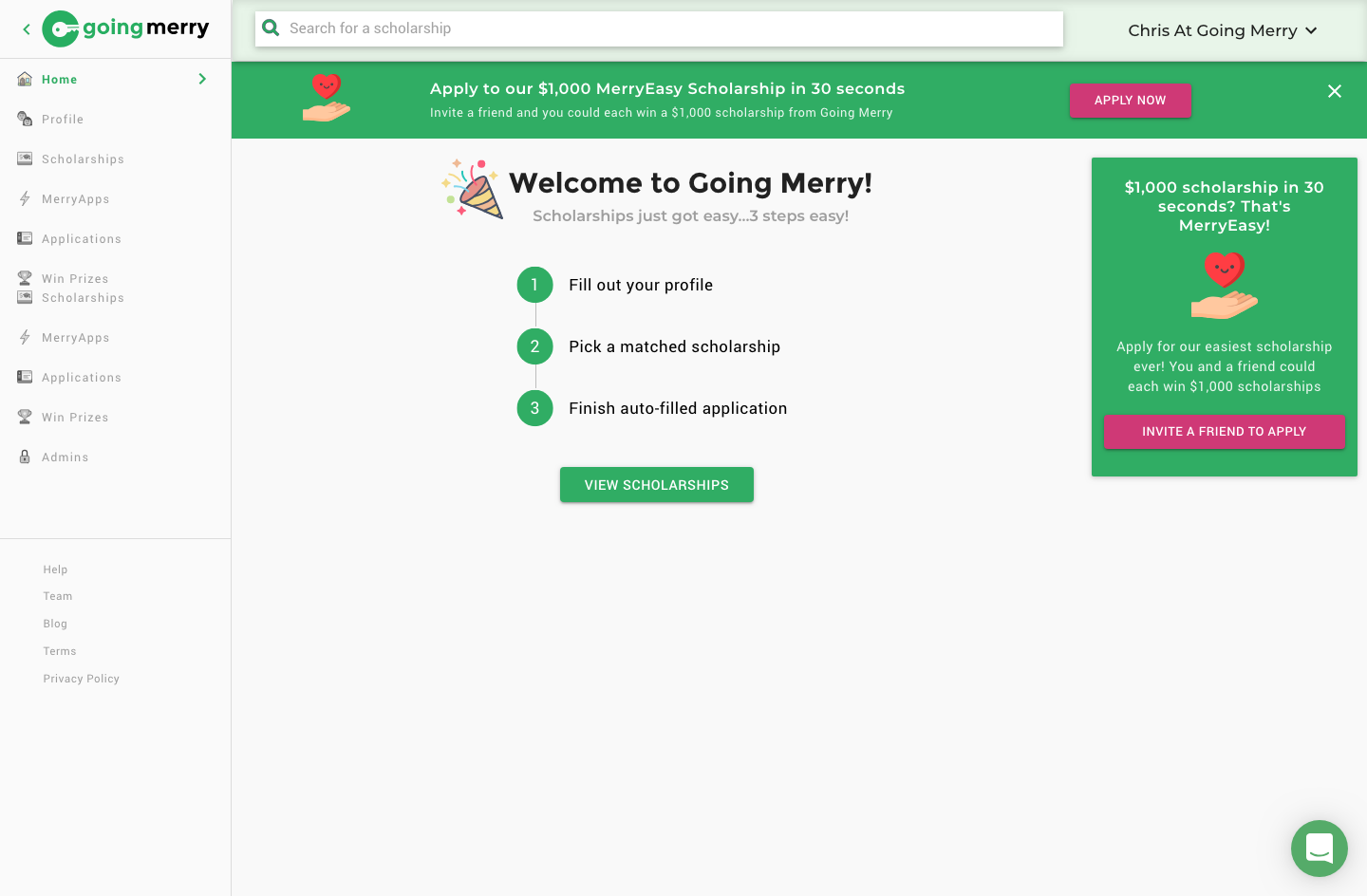
App home with personalized scholarship feed
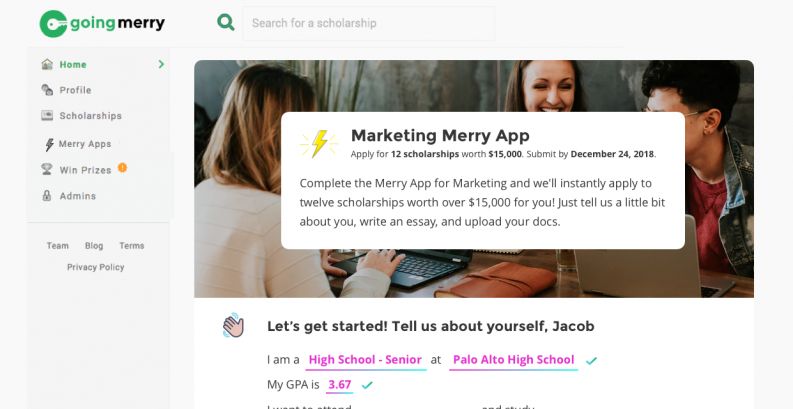
Student profile summary — personalization at the core of the experience
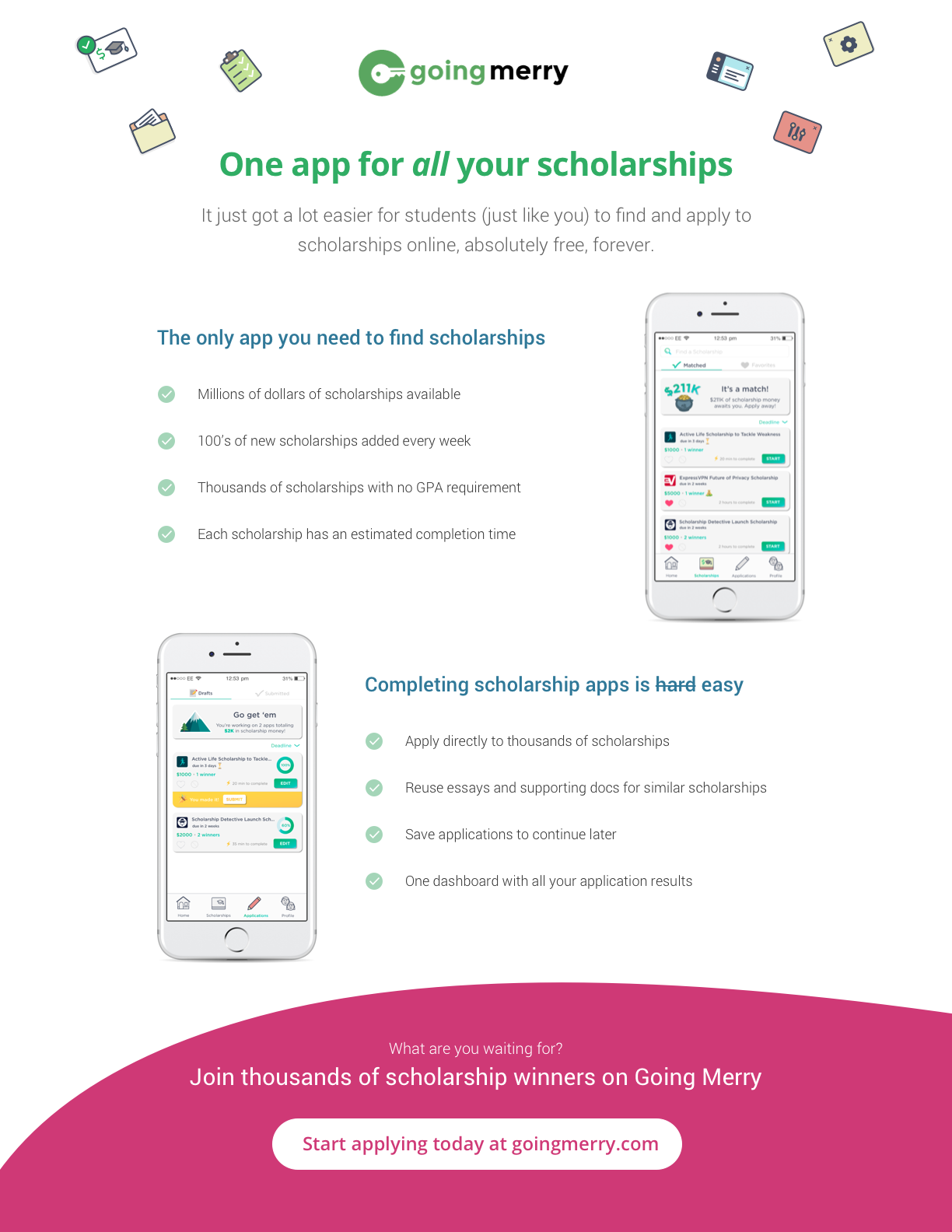
The mobile experience — scholarships matched to who you are
25x growth. Millions awarded. Eventually acquired.
In under ten months, the platform grew from 5,000 to over 125,000 active students across the country. More importantly, millions of dollars in scholarships reached students who wouldn't have found them otherwise. That was the point.
The things that shipped: a rebuilt registration experience, personalized landing pages at school and city level, no-essay scholarship categorization, a scholarship and loan repayment calculator, an early AI essay writer, and a significantly updated in-app experience built around personalization and matching.
Going Merry was acquired by Earnest in 2021.